Turnaround coordination
Status across fuelling, catering, cleaning, baggage, pushback and crew — assembled continuously, with delays surfaced to everyone affected before they cascade.
Straight answer: the industry is actively looking. IGHC 2026 runs under the theme “Adapting Ground Operations in an Era of AI,” bringing airlines, handlers, airports, regulators and vendors together on exactly this. What’s missing is anyone building for the apron rather than the office.
Last updated:
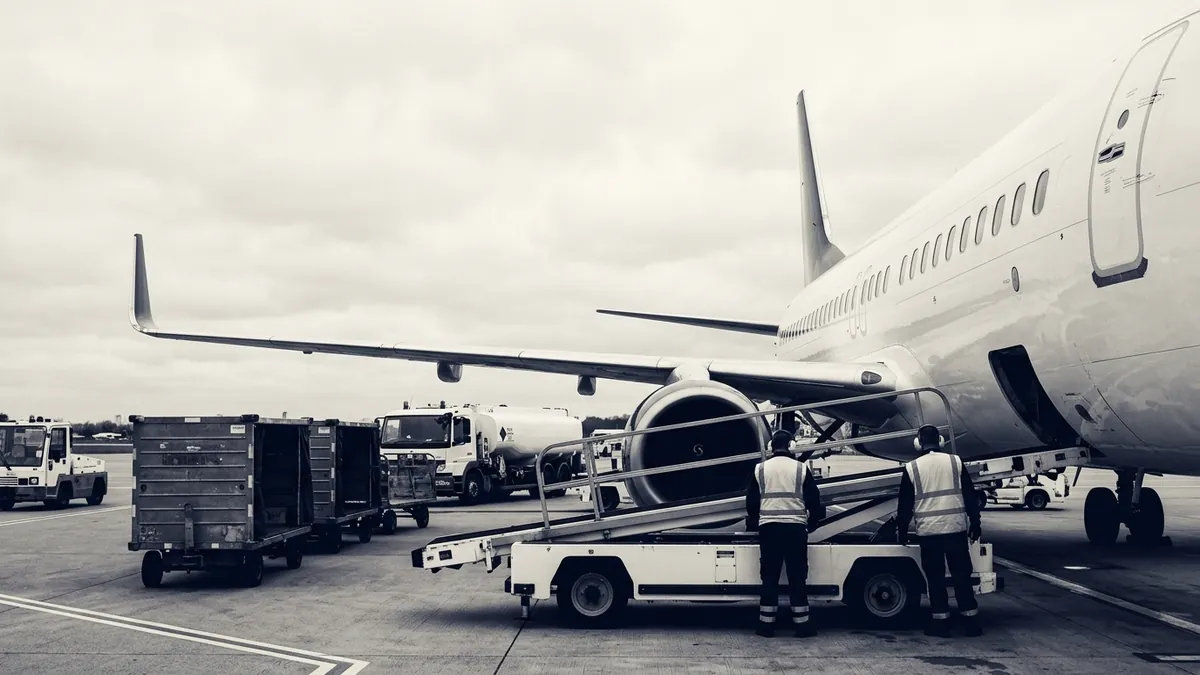
Ground handling has every qualifying signal — shift-based work, extreme time pressure, coordination across multiple parties, heavy compliance, and staff whose hands are full and who are wearing gloves and ear defenders.
That last part is why software companies stay away. It’s also why the opportunity is open.
Status across fuelling, catering, cleaning, baggage, pushback and crew — assembled continuously, with delays surfaced to everyone affected before they cascade.
Diversions, delays and cancellations trigger a coordination cascade. Agents assemble the picture, notify affected parties, and present ranked recovery options.
Shift coverage against licensing and duty-time constraints, swap requests, and briefing distribution.
Voice and photo capture at the aircraft, structured, timestamped, routed — rather than a form completed at the end of shift from memory.
Certification and recurrent training tracked continuously, with expiry flagged well before it blocks a roster.
| Today | With an agent | |
|---|---|---|
| Turnaround status | Radio calls and a whiteboard | Assembled continuously |
| Delay notification | Sequential phone calls | Everyone affected, immediately |
| Damage report | Written up post-shift | Captured at the aircraft |
| Crew swap | Manual against duty rules | Checked against hard constraints |
| Training currency | Spreadsheet | Continuous, flagged ahead |
The same workflows, described by the job rather than the sector.
It has to be tested rather than assumed — noise, ear defenders and radio traffic are real constraints. We test with your actual conditions during shadow mode, and we’d tell you honestly if a workflow needs a different interface.
Yours certainly; airport systems where access is permitted. The audit establishes what’s actually available.
Very few, which is why the audit is worth doing before the category consolidates.
Coordination and record-keeping don’t require it. Anything touching operational safety systems is out of scope by design.
Every sector page describes the workflows we’d expect to find. Yours will differ in ways that matter, and the audit is designed for exactly that — you get evidence about your own business rather than someone else’s.