Multi-agent systems
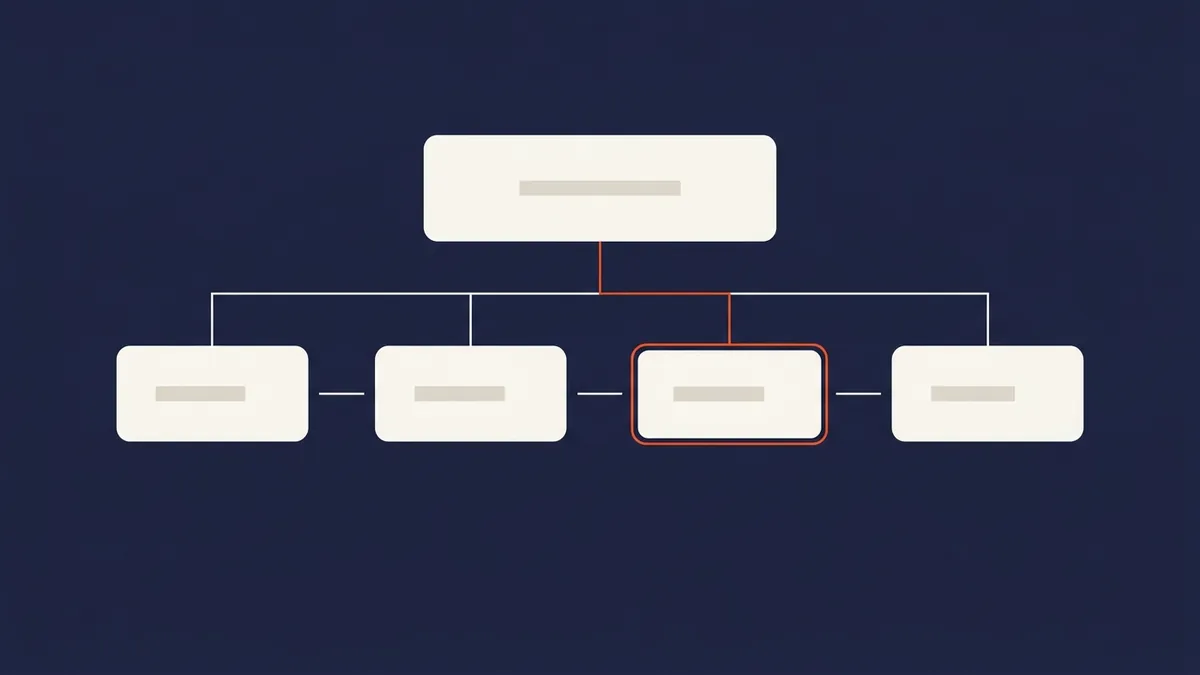
Several specialised agents coordinating on a process too broad for one — one researches, one drafts, one validates, one executes — with a supervising layer managing handoffs and confidence thresholds.
The short version: several specialised agents coordinating on a process too broad for one — one researches, one drafts, one validates, one executes — under a supervising layer that manages handoffs and confidence. This is a second or third engagement, never the first.
Last updated:
What it is
Powerful, and considerably harder to evaluate than a single agent. Failures compound across handoffs, and a confident error in the second agent becomes an input the third one trusts.
Which is why this is always a second or third engagement. Each component has to be proven in isolation before the supervising layer is worth building.
Who it’s for
Businesses past their first successful agent, ready to automate a process rather than a step.
What you get
End-to-end process coverage. This is the second or third engagement, not the first.
An evaluation suite per agent as well as for the system, because the only way to debug a multi-agent failure is to know which component drifted.
How we de-risk it
- Never the first build. We will decline this as an opening engagement, and we’ll say why.
- Each agent is evaluated independently before the composition is.
- Confidence thresholds at every handoff, with the whole chain escalating rather than the last agent guessing.
- The full trace is inspectable — which agent decided what, on what evidence.
Where this sits
Multi-agent work sits above the single-workflow builds. Start with one of those and expand once it’s proven.
Frequently asked questions
Why won’t you build this as our first project?
Because trust is bought in stages. A single-workflow agent proves the integration, the evaluation discipline and the escalation design on something inspectable. Multi-agent systems multiply every one of those risks — earn the evidence first.
Isn’t one smart agent simpler than five specialised ones?
Simpler to describe, harder to trust. Narrow agents are easier to evaluate, easier to roll back and easier to reason about when something goes wrong. The supervising layer exists so the parts stay inspectable.
How do the agents hand off to each other?
Explicitly, with confidence thresholds at every boundary — and a human escalation path from any point in the chain, not just the ends.
What’s a realistic first multi-agent scope?
Two or three agents on one end-to-end process you’ve already partially automated — for example intake → validation → routing — not an “autonomous department.”
Which category fits is the audit’s job
Most businesses arrive certain they need one of these and leave the audit having ranked a different workflow first.