Voice agents
An agent that answers and places calls, holds a natural conversation, and completes the transaction — booking, triaging, qualifying, collecting — writing the result into your system of record.
The short version: a voice agent answers or places a call, holds a natural conversation, and completes the transaction — booking, triaging, qualifying — writing the result into your system of record. Under about 1.2 seconds of round-trip latency it feels like a conversation; past 1.5, callers start talking over it.
Last updated:
What it is
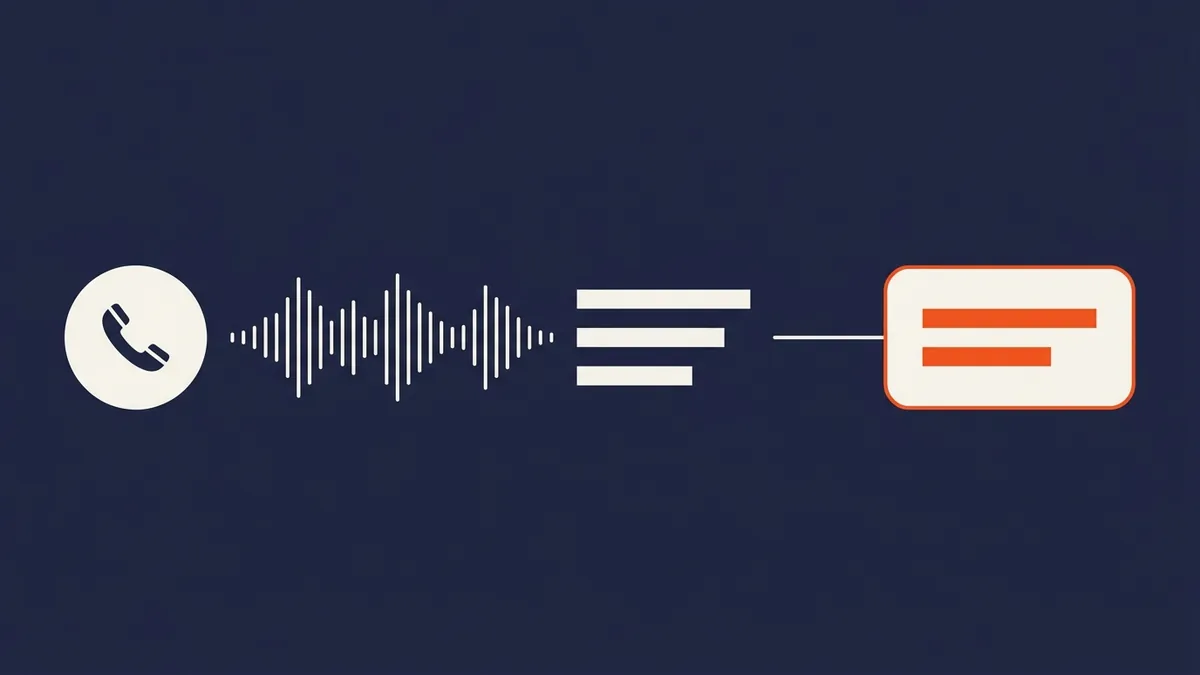
Not an IVR with better speech recognition, and not a chatbot with a phone number. The agent identifies the caller, establishes what they need, applies your triage rules, checks live availability, and writes the outcome into the system that matters.
Target latency is under 1.2 seconds round-trip. Past roughly 1.5 seconds callers start talking over the agent and the conversation degrades, which is why we treat latency as a build requirement rather than a metric to report.
Who it’s for
Any business where the phone is still the primary channel and missed calls cost money: trades, clinics, dealerships, hotels, storage, logistics.
What you get
Sub-1.2 second response, live calendar and CRM integration, escalation to a human with full context, transcript of every call.
What it costs to run. AI voice agent usage costs typically run in the low tens of cents per minute on mainstream platforms; see current published pricing from Vapi and Retell AI. We model the actual usage cost per workflow in the audit.
How we de-risk it
- Overflow before primary. The agent takes the calls your team can’t reach first, so you see it perform on real calls before it becomes the front door.
- Disclosure by default. It says it’s an AI assistant. Several states now require it, and the posture ages well.
- A clean transfer path, always. Every escalation carries context. A transfer that makes the caller repeat themselves is worse than no agent.
- Live reads and writes, never a cached calendar. It cannot double-book.
Where this sits
Voice is a build category rather than a workflow. The job it does is usually after-hours call handling, enquiry qualification or scheduling.
Frequently asked questions
Will callers hang up when they realise it’s an AI?
Far less often than they hang up on voicemail — Invoca’s platform data shows fewer than 3% of callers pushed to voicemail leave a message (Invoca, 2024). The comparison that matters isn’t agent-versus-your-best-person; it’s agent-versus-nobody.
Can it book directly into our calendar or PMS?
Yes — it reads and writes live to your system of record, which is why it can’t double-book. If it can only read, it’s a receptionist; the write access is what makes it an agent.
What does it cost to run?
Usage runs in the low tens of cents per minute all-in, depending on the speech, transport and model stack. We model it per workflow in the audit against vendors’ current published pricing.
How do you handle accents, noise and interruptions?
Confirmation of critical details back to the caller, escalation on low confidence, and shadow-mode testing on your real call audio before it ever answers as primary.
What happens when it can’t handle a call?
It transfers to your team with the full conversation context — who’s calling, what’s wrong, what’s been said. A transfer that makes the caller repeat themselves is worse than no agent.
Which category fits is the audit’s job
Most businesses arrive certain they need one of these and leave the audit having ranked a different workflow first.