AI agents for compliance reporting and evidence
In one line: compliance failures are usually evidence failures. The work was done correctly; nobody recorded it in a way that survives scrutiny. Agents fix the capture, not the compliance.
Last updated:
What this actually looks like today
Someone does the work. Someone else, days or weeks later, assembles proof that it happened — from memory, from a paper log, from a photo on a phone, from an email thread.
Then an audit arrives and a team spends two weeks reconstructing a record that should have existed all along. The reconstruction is expensive, and it’s weaker evidence than contemporaneous capture would have been.
What the agent does
- Trigger. Work completion, an inspection, a threshold event, a scheduled obligation, or a certification approaching expiry.
- Reasoning. Maps the event to the obligations it satisfies, identifies what evidence is required, and checks what’s been captured against what’s needed.
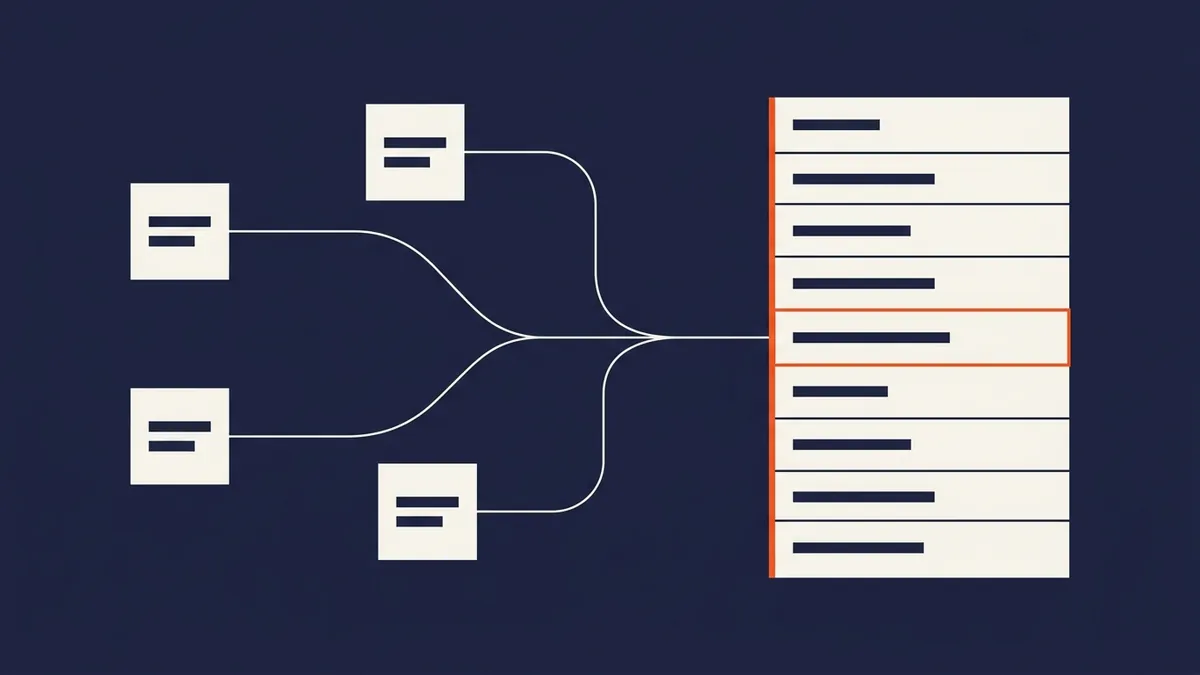
- Action. Captures evidence at the point of work — voice, photo, structured form — timestamps it, links it to the obligation, and assembles reporting on your schedule.
- Escalation. Gaps, expiring certifications and unmet obligations are surfaced before they become findings.
Traditional vs agent-augmented
| Today | With an agent | |
|---|---|---|
| Evidence capture | After the fact, from memory | At the point of work |
| Obligation tracking | Spreadsheet, reviewed periodically | Continuous |
| Certification expiry | Discovered at the gate | Flagged weeks ahead |
| Audit preparation | Weeks of reconstruction | Assembled already |
| Evidence quality | Reconstructed | Contemporaneous, timestamped |
| Gaps | Found by the auditor | Found by you, first |
Where we’ve built this
- Mining & Resources — permits, isolations, safety observations, contractor certifications
- Aged Care & Disability — care notes, incident records, funding claim evidence
- Insurance & Claims — decision trails and regulatory reporting
- Waste & Recycling — weighbridge records, contamination and disposal evidence
- Security & Guarding — patrol logs, incident reports, licensing currency
Systems we integrate with
- HSE and compliance platforms: major EHS systems with API access
- ERP and maintenance: SAP, Maximo, Pronto, Dynamics
- Care systems: major aged care and NDIS platforms
- Capture: offline-tolerant mobile, voice, photo with metadata
How we de-risk it
- The agent never attests. It captures, structures and assembles. A qualified person signs. Accountability does not move, and any vendor implying it does is selling you a liability problem.
- Immutable audit trail. Every record carries timestamp, source, capturer and confidence. Amendments are versioned, never overwritten.
- Evidence stays in your infrastructure, under your retention policy and access controls.
- Gaps surface loudly. An agent that quietly fails to capture is worse than no agent, so missing evidence is an alert, not a silence.
Frequently asked questions
Does this make us compliant?
No. It makes your compliance provable and your gaps visible earlier. Compliance remains a function of doing the work correctly.
What about regulator acceptance of AI-assisted records?
The records are ordinary structured records with better provenance than paper. The agent assists capture; a person attests. That distinction matters and we build to it explicitly.
Can it handle multiple overlapping regimes?
Yes — obligations are modelled separately and a single evidence item can satisfy several. That’s usually where the biggest saving is.
What if the regulations change?
Obligation rules are configuration, not code. Updating them is a change request, and it’s covered under AgentOps.
Work out what this is costing you
The calculator takes ten inputs and shows the payback band. It won’t tell you whether your systems permit the integration — that’s what the audit tests.