AI agents for shift handover and continuity
In one line: a substantial share of what determines operational performance travels by radio, message thread and verbal handover, and never reaches a system. Mining equipment maintenance costs run 20–40% of total operating costs (ResearchGate, 2022), yet much of the operational knowledge that drives availability decisions is never captured. When something goes wrong three weeks later, the record doesn’t exist. This is the largest pool of uncaptured operational data in most businesses.
Last updated:
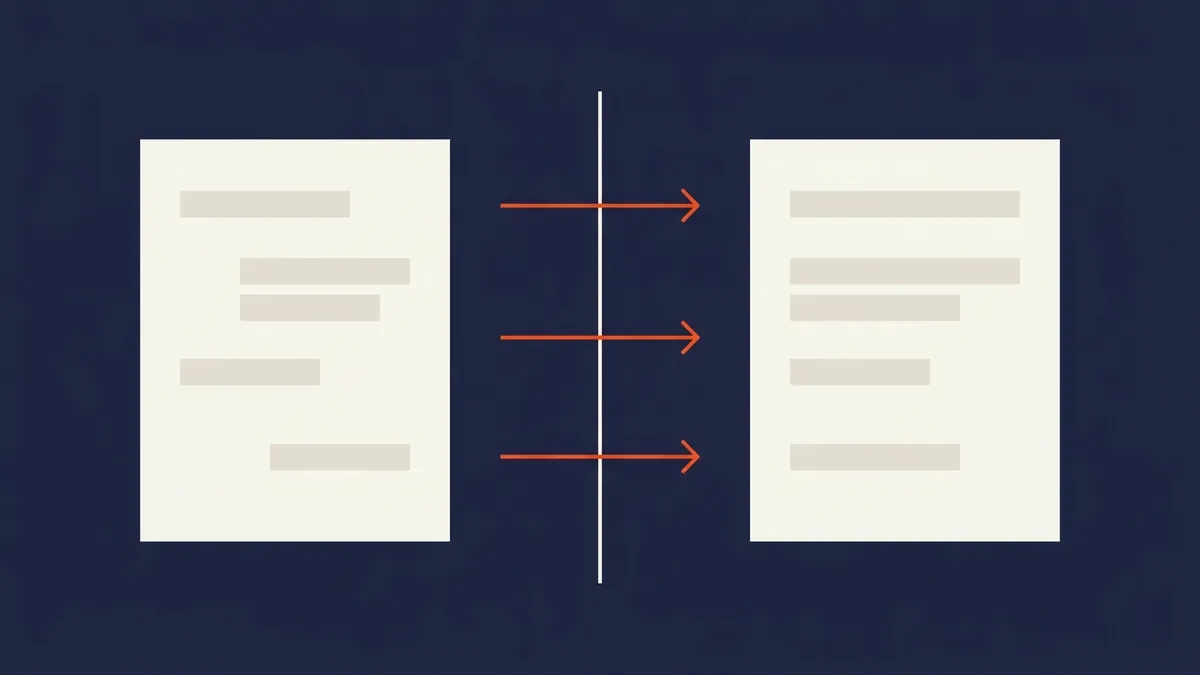
What this actually looks like today
Ten to twenty minutes at shift change, verbal, unrecorded. What’s broken, what’s been tried, what to watch, what the client said, which crew member is having a bad week.
Quality varies enormously by who’s handing over. When a supervisor is off-roster, the continuity breaks entirely. And when an incident investigation asks what was known and when, the honest answer is that nobody can reconstruct it.
What the agent does
- Trigger. Shift end, or continuous capture through the shift.
- Reasoning. Structures free-form speech against your asset register, client records or job list. Identifies what’s new since the last handover, what remains open, and what has escalated.
- Action. Produces a briefing for the incoming shift — what changed, what’s open, what needs attention first — and writes a searchable record.
- Escalation. Safety-relevant items and unresolved risks are flagged rather than buried in the middle of a summary.
Traditional vs agent-augmented
| Today | With an agent | |
|---|---|---|
| Capture | Verbal, 10–20 min | Voice, structured automatically |
| Consistency | Varies by person | Same fields every time |
| Searchability | None | Full history, queryable |
| Continuity when someone’s away | Breaks | Holds |
| Incident reconstruction | Memory | Timestamped record |
| Safety items | Mixed in | Flagged and tracked |
Where we’ve built this
- Mining & Resources — shift boss handover, FIFO roster continuity
- Ports & Terminals — equipment status that never reached the TOS
- Aged Care & Disability — clinical and behavioural handover, feeding care notes
- Security & Guarding — patrol observations and incident continuity
Systems we integrate with
- Maintenance: SAP PM, Maximo, Pronto, Mex, Fiix
- Care and client systems: major aged care and NDIS platforms with API access
- Terminal and yard: TOS platforms
- Capture: offline-tolerant mobile and voice, radio-to-text gateways where deployed
How we de-risk it
- Offline first. Remote sites and basements drop out. Capture queues locally and reconciles later.
- Nobody types. If handover requires typing, it won’t happen. Voice is the interface, and it has to work with background noise, PPE and accents — which is exactly what we test in shadow mode.
- The human still hands over. The agent captures and structures; it doesn’t replace the conversation. Crews that feel replaced stop cooperating, and the data quality collapses.
Frequently asked questions
Will crews actually use it?
Only if it’s faster than what they do now. Voice capture that takes three minutes replaces a twenty-minute conversation plus a written log. If it’s slower, it fails — and we’d rather find that in shadow mode.
Is this surveillance?
It’s a record of operational status, not of people. That distinction has to be real and visible, and how you introduce it matters more than the technology. We’ll advise on that during the build.
What about privacy in care settings?
Client information is handled under your existing obligations, in your infrastructure, with your access controls. Nothing leaves your environment.
Can it work without connectivity?
Yes. That’s a design requirement, not an add-on.
Work out what this is costing you
The calculator takes ten inputs and shows the payback band. It won’t tell you whether your systems permit the integration — that’s what the audit tests.