Document and intake agents
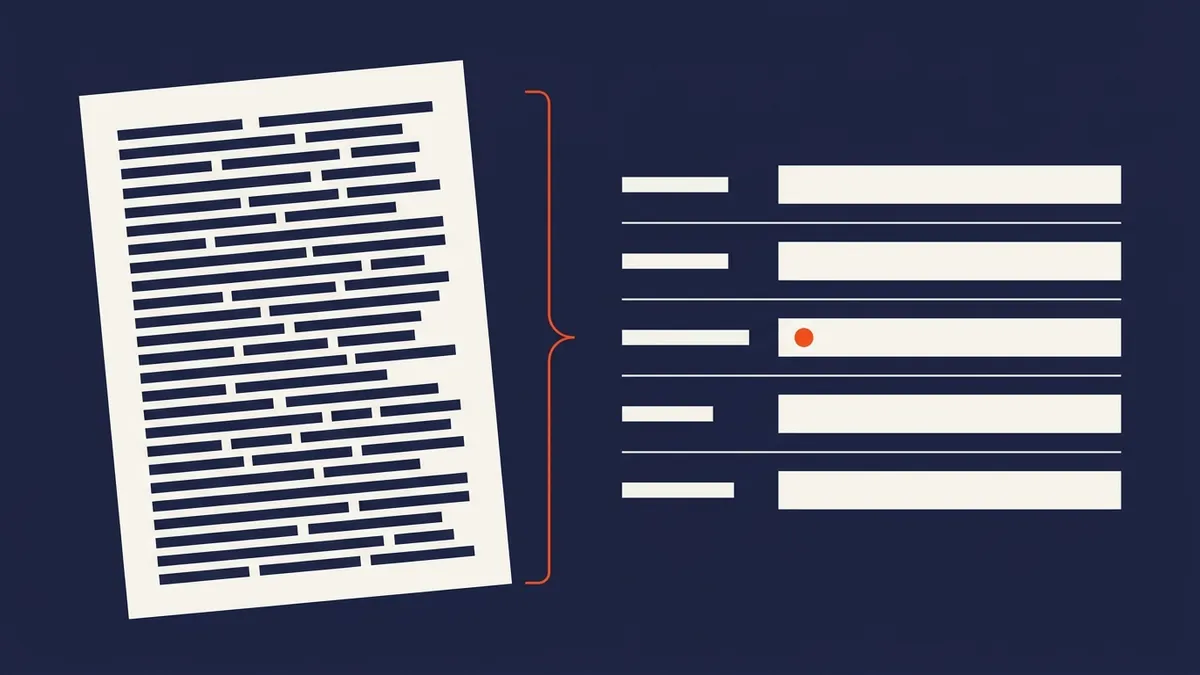
An agent that reads unstructured input — PDFs, drawings, emails, forms, photos, voice — extracts what matters, validates it against your rules, and writes structured data into your systems.
The short version: an enormous amount of professional work is a person reading information from one place and typing it into another. A document agent removes the typing and adds the validation nobody had time for — and it never approves anything.
Last updated:
What it is
OCR reads characters. An agent understands what the document is, which fields matter, whether it’s complete, whether it conflicts with what you already hold, and what to do about it.
The chase is usually more expensive than the extraction, so the agent requests missing information directly from the sender on a cadence and tone you configure.
Who it’s for
Anyone whose work starts with somebody re-typing information that already exists somewhere else.
What you get
Intake without transcription, and validation before a human ever sees it.
Every extracted field carries a confidence score, and the source document stays attached to the structured record — which is what makes this defensible in an audit or a dispute.
How we de-risk it
- Low-confidence fields are flagged for human verification rather than silently accepted.
- Validation rules are yours and auditable. No black-box acceptance decisions.
- The agent never approves. It extracts, validates, chases and routes.
- We test on your actual document mix in shadow mode, including the bad scans and the phone photos.
Where this sits
The job this does is document and intake processing, and it underpins compliance evidence and vendor compliance work too.
Frequently asked questions
Does it work on bad scans and phone photos?
Usually, and it says so when it can’t rather than guessing. Every extracted field carries a visible confidence score; low-confidence fields route to a human before anything is written.
What about handwriting?
Structured handwritten forms work reasonably. Free-form handwriting is unreliable, and we’ll tell you that in the audit rather than promise it.
How is this different from the OCR we already have?
OCR reads characters. The agent understands what the document is, which fields matter, whether it’s complete, whether it conflicts with what you already hold — and chases the sender for what’s missing, which is usually the largest saving.
Is the original document kept?
Always. Every structured record links back to its source, which is what makes the output defensible in an audit or a dispute.
Not sure this is your operation
Every sector page describes the workflows we’d expect to find. Yours will differ in ways that matter, and the audit is designed for exactly that — you get evidence about your own business rather than someone else’s.