Service booking and capacity filling
Every call answered, vehicle identified from rego or VIN, service type determined, live capacity checked, slot booked, confirmation sent.
The short version: the service department is where dealership profit actually lives, and the service desk phone is where it leaks. Calls ring out during the busiest hours, and the customer books at the independent workshop down the road.
Last updated:
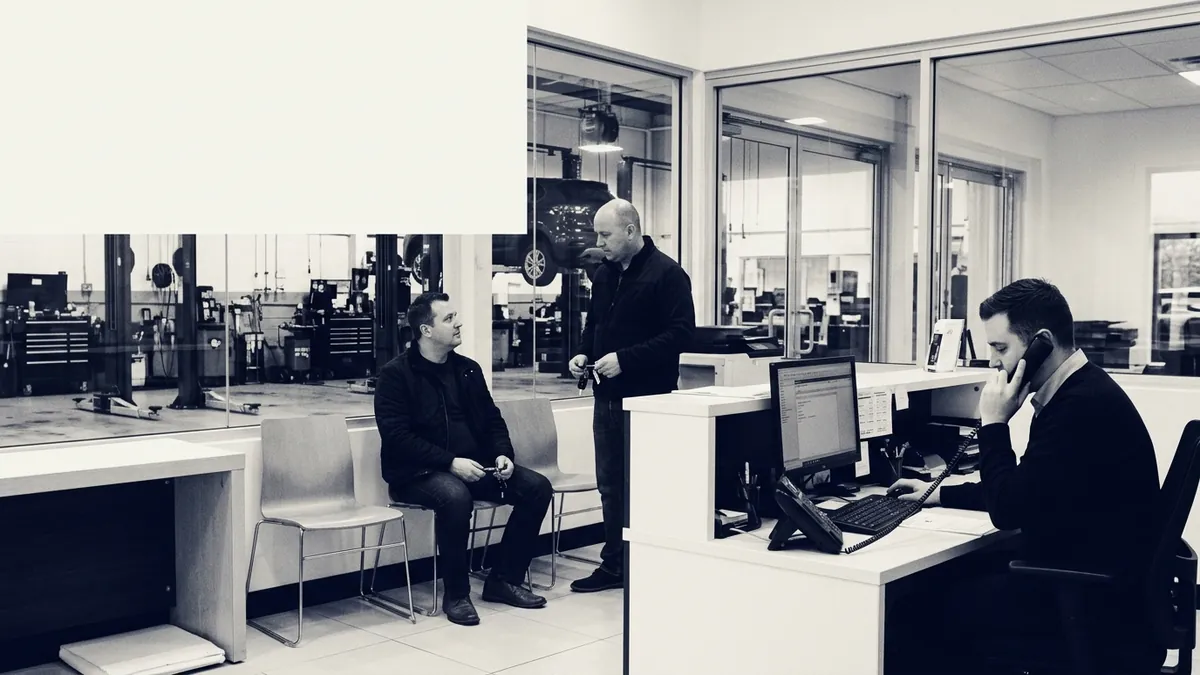
Service bays have finite capacity and near-fixed cost. Every unfilled slot is unrecoverable. Meanwhile parts enquiries, booking changes and “is my car ready” calls consume the same advisors who are supposed to be filling those bays.
Sales gets the attention. Service gets the margin.
Every call answered, vehicle identified from rego or VIN, service type determined, live capacity checked, slot booked, confirmation sent.
Fitment questions answered against your catalogue, availability checked, orders raised or backorders explained.
“Is it ready?” answered from live workshop status rather than interrupting an advisor.
Initial valuation conversations qualified and routed with the vehicle details already captured.
Preliminary qualification gathered conversationally before a salesperson invests time — with anything approaching a credit decision escalated to a human.
Due services, lapsed customers and recall campaigns worked systematically.
| Today | With an agent | |
|---|---|---|
| Peak-hour call | Rings out | Answered and booked |
| After-hours booking | Voicemail | Booked into live capacity |
| “Is my car ready?” | Interrupts an advisor | Answered from workshop status |
| Parts fitment query | Advisor checks catalogue | Answered immediately |
| Lapsed service customer | Forgotten | Reactivated on schedule |
The same workflows, described by the job rather than the sector.
More readily than they accept a busy signal. Routine booking is exactly the transaction they’d rather complete quickly.
From registration or VIN against your DMS, yes — which is more reliable than a customer describing their car.
It gathers preliminary information only. Anything resembling a credit assessment or regulated advice escalates.
Typically 3–6 weeks on a supported DMS.
Every sector page describes the workflows we’d expect to find. Yours will differ in ways that matter, and the audit is designed for exactly that — you get evidence about your own business rather than someone else’s.