AI agents for quoting and estimating
The honest position: most businesses lose more work to slow quoting than to high pricing. The quote that arrives in an hour wins against the quote that arrives on Thursday, at a higher price, more often than anyone in sales wants to admit.
Last updated:
What this actually looks like today
An enquiry arrives with a drawing, a scope, or a description. Your estimator queues it behind four others. When they get to it they read the drawing, look up material costs, estimate labour from experience, check what you quoted on the last similar job, and assemble a document.
Two to six hours per quote, three days of queue, and roughly half of them never followed up after sending.
What the agent does
- Trigger. An inbound enquiry, drawing, RFQ or spec.
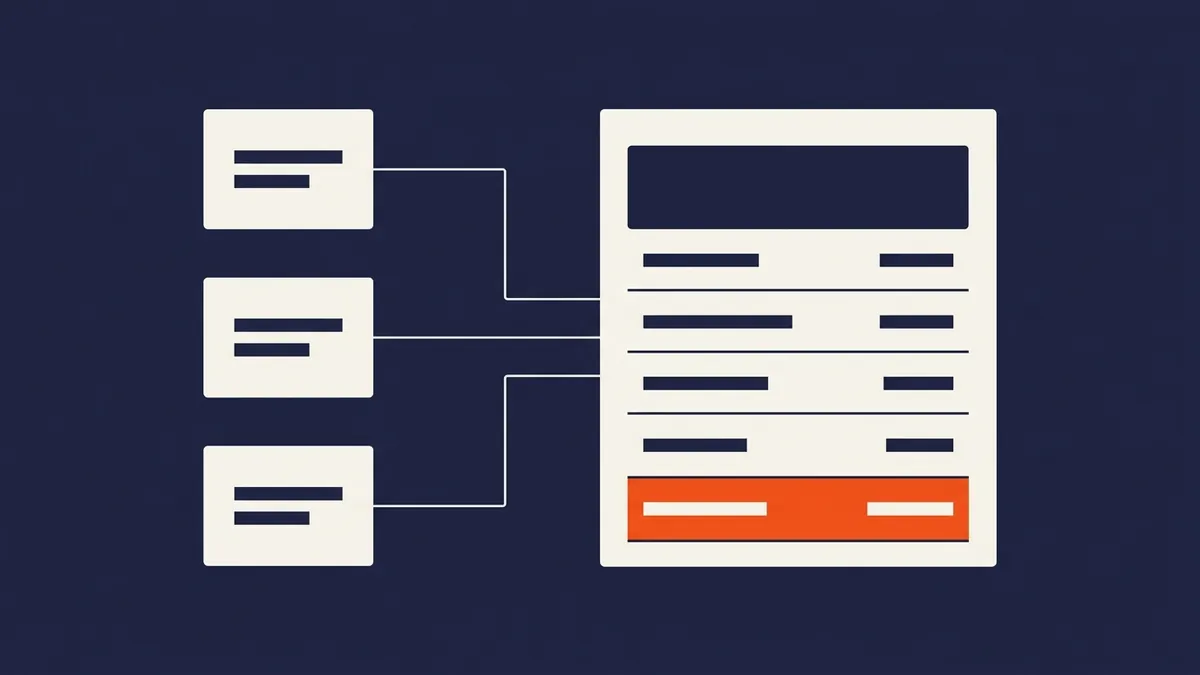
- Reasoning. Extracts scope from the source document, matches against your rate card and historical jobs, calculates material and labour, applies your margin rules and current pricing.
- Action. Produces a quote with the pricing breakdown, routes it for approval, sends on release, then follows up on your defined cadence until the customer responds.
- Escalation. Unfamiliar scope, unusual materials or anything outside normal margin bands goes to your estimator with the analysis already done.
Traditional vs agent-augmented
| Stage | Today | With an agent |
|---|---|---|
| Queue time | 1–3 days | None |
| Drawing/scope read | 30–90 min | Minutes |
| Historical comparison | If there’s time | Always |
| Pricing consistency | Varies by estimator | Consistent, rules-applied |
| Follow-up | Roughly half get one | Every quote, on cadence |
| Win/loss data | Anecdotal | Structured |
Where we’ve built this
- Manufacturing — engineering drawings to material, labour and quote
- Construction — scope extraction from tender documents
- Home Services & Trades — rate card quoting with same-day turnaround
- Equipment Rental — availability-aware quoting with utilisation pricing
Systems we integrate with
- ERP/MRP: SAP, Epicor, Pronto, Dynamics, Katana
- Field service: simPRO, ServiceM8, ServiceTitan, Tradify
- Estimating: existing estimating platforms, extended rather than replaced
- Documents: PDF and CAD extraction, Bluebeam markup sets
- CRM: HubSpot, Pipedrive, Salesforce
How we de-risk it
- A human releases every quote at first. The agent prepares; you send. Autonomy on release is a later decision, and many clients never make it — which is fine, because the queue time was the problem, not the signature.
- Margin floors are hard constraints. The agent cannot quote below them, ever.
- Unfamiliar scope escalates rather than guessing. A confidently wrong quote on unusual work is far more expensive than a slow one.
Frequently asked questions
Can it really read an engineering drawing?
For standard fabrication and common formats, yes — it extracts dimensions, materials and quantities well. Complex assemblies and non-standard notation still need an estimator, and the agent flags rather than guesses.
What if it prices something wrong?
A human releases the quote. Margin floors are enforced. And every quote logs its reasoning, so a mispricing is diagnosable rather than mysterious.
Will this commoditise our pricing?
It applies your rules faster. If your pricing currently varies because different estimators guess differently, consistency is a gain, not a loss.
Does it learn from won and lost quotes?
It structures the data so you can see the patterns. Automatic price adjustment based on win rate is possible and we’d generally advise against it without human review.
Work out what this is costing you
The calculator takes ten inputs and shows the payback band. It won’t tell you whether your systems permit the integration — that’s what the audit tests.